How to Find Your True Foundation Shade: Why Guessing Rarely Works
Finding your true foundation shade should feel simple. Except that is rarely what happens. Here’s why traditional matching depends too heavily on guessing — and why measured skin tone is the future.
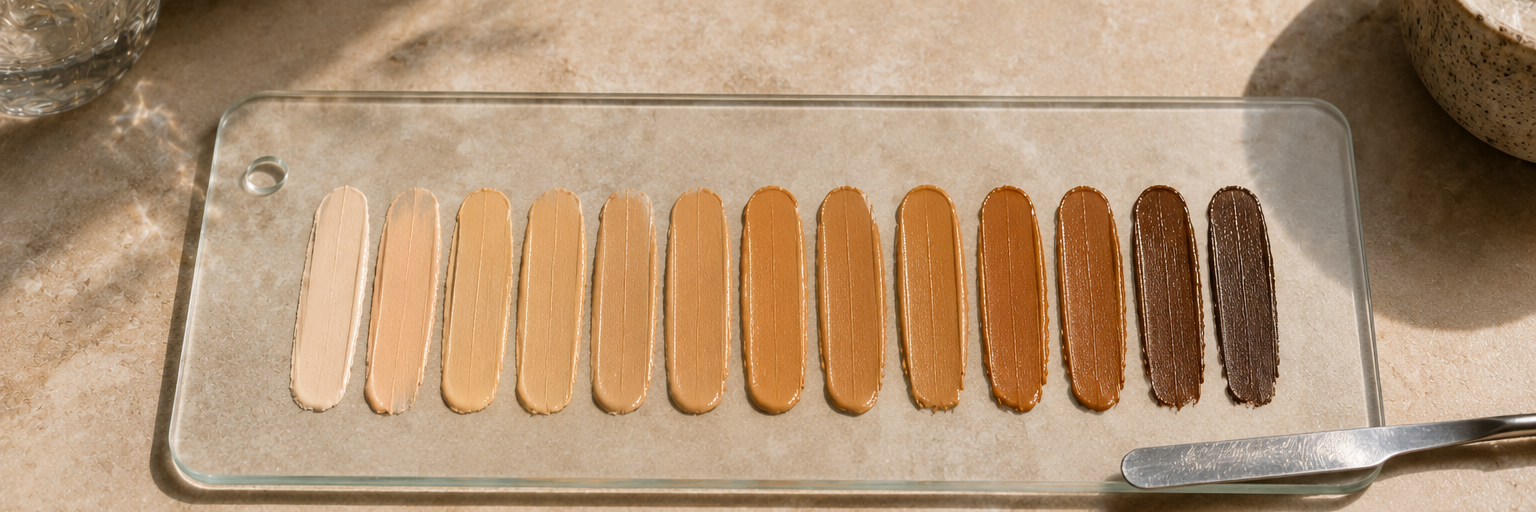
Finding your true foundation shade is difficult because most shade matching still relies on guesswork: looking at bottles, trusting store lighting, choosing a familiar label, or hoping a shade name means the same thing across formulas.
But the solution is not to keep buying and hoping. The solution is to change how you match.
A better foundation match comes from checking the right things in the right order: your skin depth, undertone, lighting, dry-down, formula and how your skin tone varies across your face.
Here is how to stop guessing and find a foundation shade that looks more like your real skin.
STEP 1Start with your skin depth, but do not stop there
Skin depth is how light or deep your skin is. Most people begin here, using labels like fair, light, medium, tan, deep or rich.
That is a useful starting point, but it is not enough. Two people can both be medium and need completely different foundations because one is golden, one is olive, one is rosy and one is muted.
STEP 2Identify your undertone through patterns, not one-off tests
Undertone is the colour direction beneath your surface skin tone. It is why a foundation can be the right depth but still look wrong.
If you want a deeper guide, see: How to Find Your Foundation Undertone.
The problem is that undertone labels are not universal. One brand’s neutral may look peach, while another brand’s warm may look orange. The label can guide you, but it cannot guarantee the match.
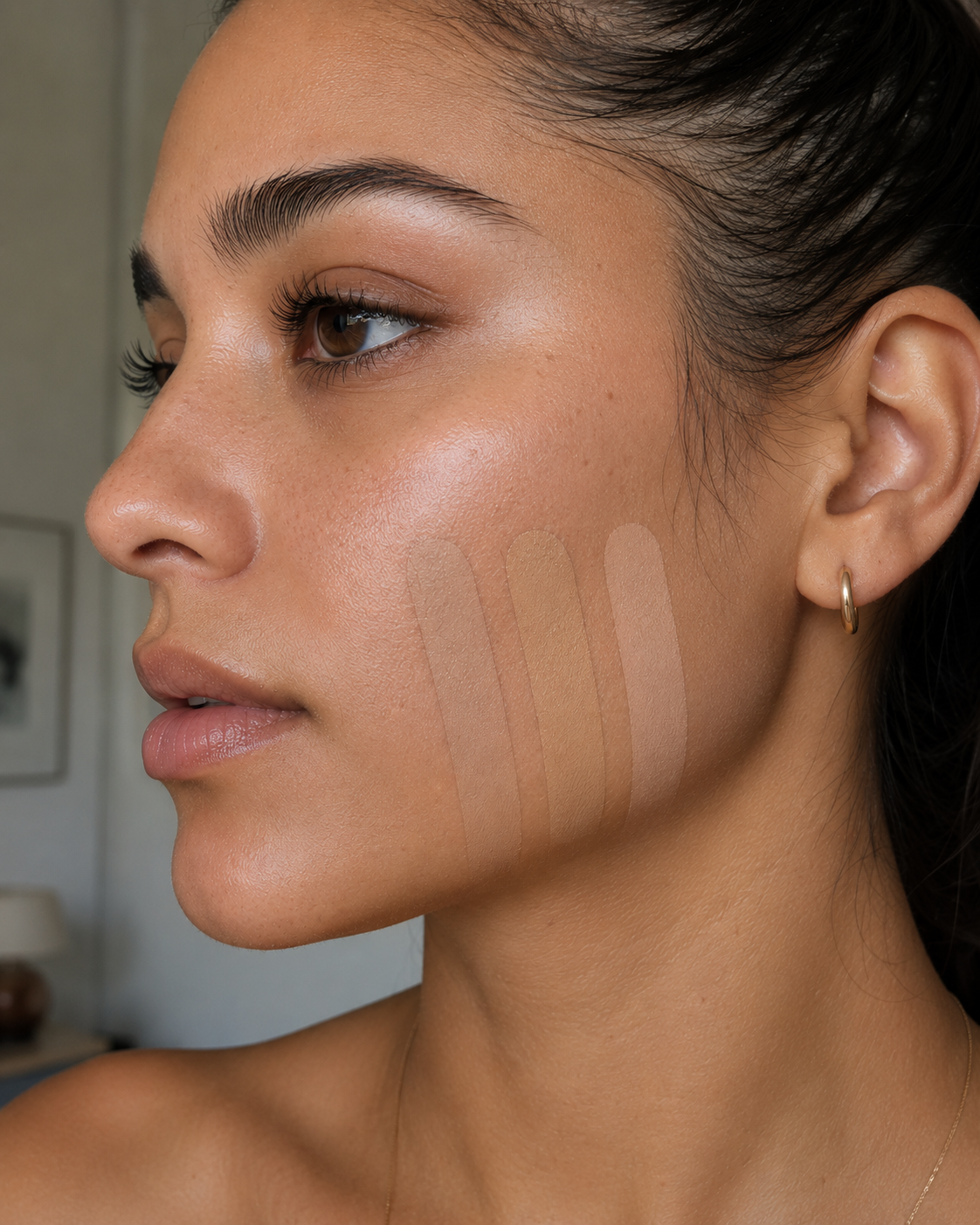
STEP 3Test foundation in the right lighting
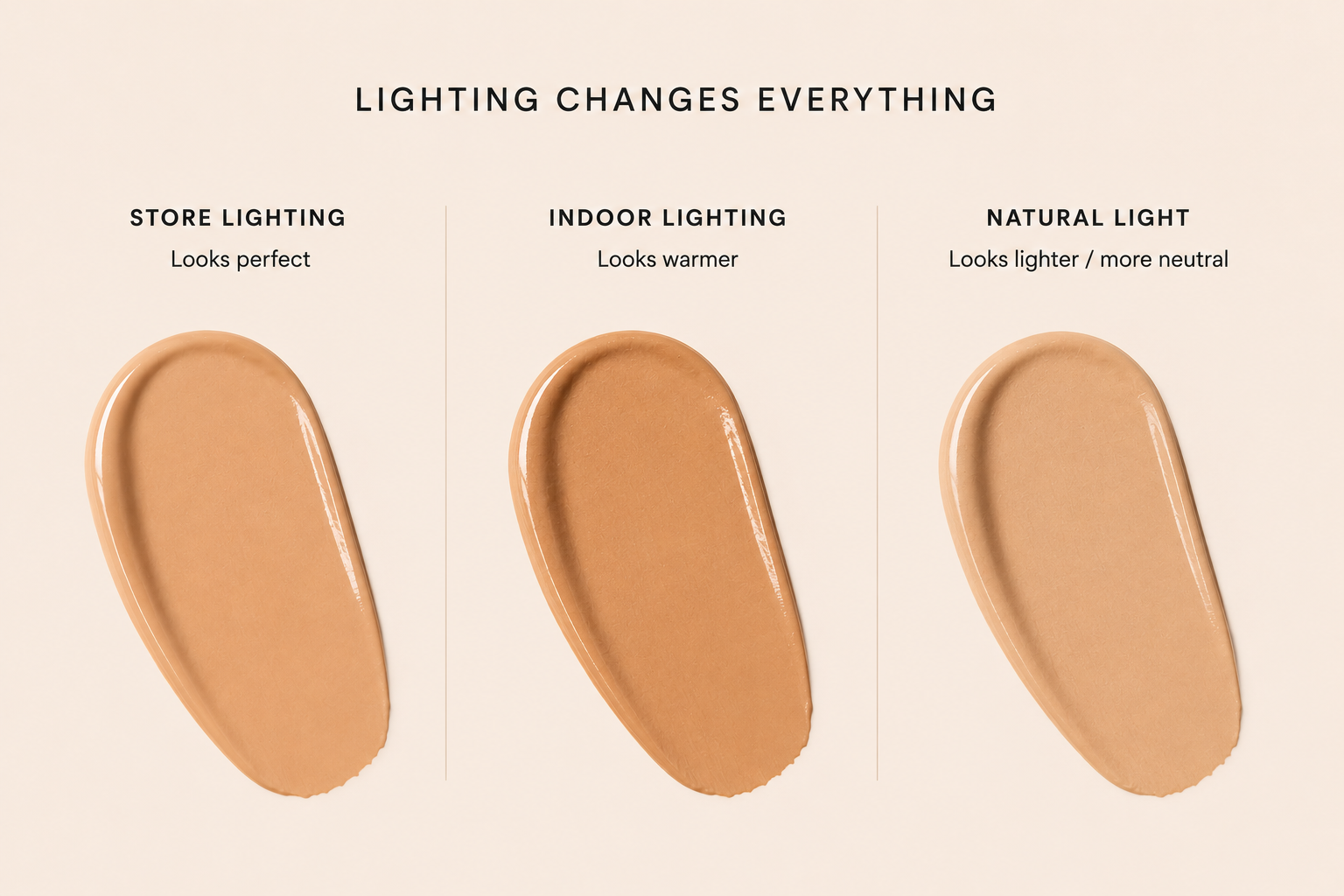
A foundation that looks perfect in a shop can look completely different at home. Store lighting is often warm, bright or flattering, but it is not the same as daylight or the lighting you wear your makeup in.
A good shade should still look balanced outside the store.
STEP 4Wait for dry-down before deciding
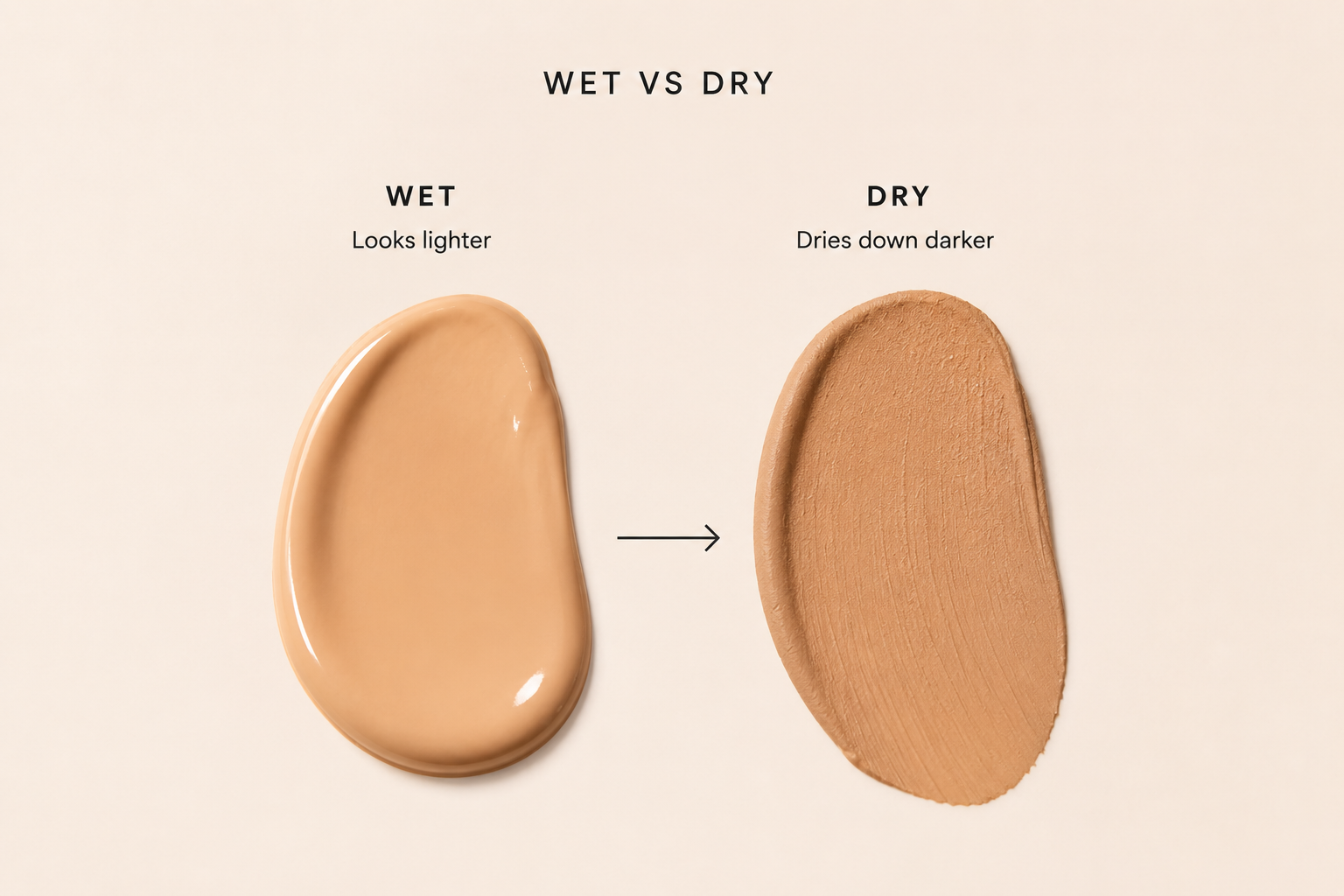
A wet swatch is not the final colour.
Foundation can look lighter, fresher or more reflective when first applied, then become darker, warmer, duller or more matte once it sets. This is often called oxidation, but sometimes it is simply dry-down.
STEP 5Match the formula as well as the colour
Foundation is pigment inside a formula, and formula changes how colour appears.
A full-coverage matte foundation can make a shade look stronger or deeper. A radiant formula may look softer and more forgiving. A skin tint may let more of your natural tone show through. Even the same shade from the same brand can look different in a different product.
STEP 6Look at your whole face and neck, not one small patch
Your face is not always one single colour. The forehead, cheeks, jaw area and areas with redness or pigmentation can all read differently.
STEP 7Use measured skin tone where possible
Visual matching is easily influenced by lighting, labels, packaging, mirrors and assumptions. That is why guessing so often leads to repeat mistakes.
Measured skin tone gives you a more consistent starting point.
With the right image capture, lighting guidance and colour analysis, a camera-based foundation finder can assess visible skin tone more objectively than visual judgement alone. It can also compare your skin tone with reliable product data, rather than relying only on shade names or undertone claims.
SectionA simple foundation matching checklist
Before buying your next foundation, ask:
SectionFinal takeaway
The way to find your true foundation shade is not to become better at guessing. It is to stop relying on guessing as the main method.
Start with your skin depth, learn from your undertone patterns, check the shade in real lighting, wait for dry-down, consider the formula and use measured skin tone wherever possible.
A true foundation match should not just look close in the bottle or under shop lights. It should look like your skin in real life.
Ready to stop guessing?
Ready to stop guessing? Try a science-backed foundation finder that uses measured skin tone and reliable product data to recommend a more accurate foundation match.
Get started here: analyze your skin.
If you need help taking a photo or troubleshooting, see our FAQ.